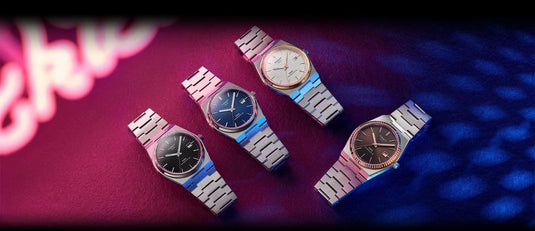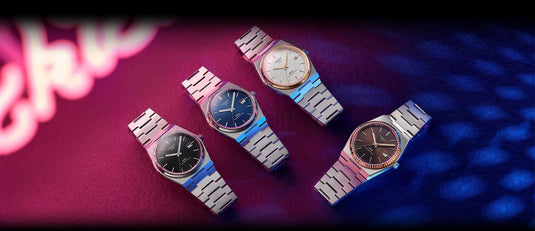

Tissot Automatic Watches in India — The Powermatic 80 Explained (2026 Guide)
You're looking at a Tissot and you see the words "Powermatic 80" on the caseback or dial. You know it means something important. But what, exactly?
This is the question we get at our showrooms more than any other: "What is the Powermatic 80 and why does it matter?"
Tissot Automatic Watches in India Zimson
This guide answers that completely. We'll explain what automatic watches are and why they're worth owning, break down exactly what the Powermatic 80 does and why it's considered remarkable for the price, walk you through all three tiers of this movement, and list every Tissot Powermatic 80 watch currently available in India with prices — so you can find the right one for your budget and lifestyle.
By the end, you'll know more about this movement than most people who are already wearing one.
Zimson has been an authorized Tissot retailer since 1948. We sell more Powermatic 80-equipped watches than any other single movement in our stores. This guide is built from real experience, real customer conversations, and verified technical data.
Part 1 — What Is an Automatic Watch? (And Why Does It Matter?)
Before we get to the Powermatic 80 specifically, let's understand what an automatic watch actually is — because this is the foundation of why mechanical watches hold a special place that quartz watches simply don't.
Quartz vs Automatic — the essential difference
A quartz watch runs on a battery. Inside is a tiny piece of quartz crystal that vibrates 32,768 times per second when electricity passes through it. Those vibrations drive a motor that moves the hands. It is accurate, cheap to make, and needs almost no maintenance. A battery every year or two, and you're done.
An automatic watch has no battery. It runs on mechanical energy stored in a coiled spring — the mainspring — inside a drum called the barrel. Winding the mainspring stores energy; the mainspring slowly uncoils, and that energy is released through a series of gears to move the hands. The spring is kept wound by the motion of your wrist through a rotor — a semicircular weight that spins every time you move. This is why it's "automatic" — it self-winds as you wear it.
Inside, there are no electronics, no battery, no circuit board. Everything is gears, springs, levers, and jewels. A modern automatic movement can have 100 to 300 individual components, many of them smaller than a grain of rice, assembled by hand or by precision machinery in Switzerland.
An automatic watch is powered purely by physics and craftsmanship. That is why people who understand watches value it differently from a battery-powered timepiece.
Why do people choose automatic over quartz?
The practical answer is that most people who buy an automatic watch don't need one. A quartz watch is more accurate. A quartz watch is lower maintenance. A quartz watch is often cheaper.
But people choose automatic watches for reasons beyond practicality:
-
Ownership satisfaction — wearing a mechanical device that has no electronics, keeps accurate time, and is powered purely by your own movement is a uniquely satisfying experience
-
Craft appreciation — seeing the movement through an exhibition caseback, watching the rotor spin, understanding the engineering inside is genuinely interesting
-
Longevity — a well-maintained automatic watch can last generations; a quartz watch needs a new battery every year and eventually the circuitry fails
-
Resale and heritage value — automatic watches hold their value better and carry more prestige as gifts and heirlooms
-
Status and conversation — in India, gifting a mechanical automatic Swiss watch carries a different weight than a quartz piece
What is the "power reserve"?
When a mainspring is fully wound, the watch can run for a certain amount of time without being worn or manually wound — this is the power reserve. Most automatic watches have a 38 to 48-hour power reserve. This means if you take the watch off on Friday night and put it on again Monday morning, it will have stopped.
This is one of the most practical limitations of automatic watches and one of the first things buyers ask about. The Tissot Powermatic 80 was designed specifically to solve this problem.
Part 2 — The Tissot Powermatic 80 Explained
The origin story — why Tissot built a new movement
In 2012, Tissot — working with ETA, the movement manufacturing arm of the Swatch Group — announced the Powermatic 80. It began appearing in watches from 2013 and has since become the defining movement of the brand.
The brief was specific: take the ETA 2824-2, one of the most reliable and widely used automatic movements in the world, and redesign it to offer dramatically more power reserve without compromising accuracy or adding bulk. The 2824-2 had a standard power reserve of around 42 hours. Tissot wanted at least 80.
How did they achieve it? Three technical innovations working together:
-
Reduced oscillation frequency — the Powermatic 80 beats at 21,600 vibrations per hour (3Hz), compared to the 2824-2's 28,800 vph (4Hz). Fewer beats per second means less energy consumed, which extends the power reserve significantly.
-
Enlarged mainspring barrel — a wider barrel accommodates a longer mainspring, storing more energy before it needs to be rewound.
-
Nivachron hairspring — the balance spring, which regulates the rhythm of the movement, is made from Nivachron — a titanium alloy developed by ETA. This material is highly resistant to magnetic fields, temperature changes, and shocks.
The result: a movement that can run for 80 hours — more than three full days — without being worn or wound. It was, at the time of its launch, the longest power reserve available in any watch at Tissot's price point. It remains outstanding value today.
Leave your Tissot Powermatic 80 off your wrist on a Friday evening. Pick it up Monday morning. It will still be running, still showing the right time. No other Swiss automatic at this price offers this.
Powermatic 80 — full technical specifications
|
Powermatic 80 — Technical Data |
|
|---|---|
|
Base calibre |
ETA C07.111 / C07.611 (evolved from ETA 2824-2) |
|
Type |
Automatic (self-winding via bidirectional rotor) |
|
Diameter |
25.6mm |
|
Jewels |
23–25 (depending on variant) |
|
Frequency |
21,600 vph / 3Hz (6 beats per second) |
|
Power reserve |
80 hours (approximately 3.3 days) |
|
Hairspring (Standard) |
Nivachron — titanium alloy, anti-magnetic, anti-shock |
|
Hairspring (Silicium tier) |
Silicon — fully non-magnetic, self-lubricating |
|
Accuracy (Standard) |
±7 seconds/day (regulated to +3 sec) |
|
Accuracy (COSC tier) |
COSC chronometer certified: –4 to +6 sec/day |
|
Caseback |
Transparent exhibition caseback (most models) |
|
In production since |
2013 |
|
Also used by |
Hamilton (as H-10), Mido (as Calibre 80), Certina |
The Powermatic 80 is the same base calibre used under different names by Hamilton, Mido, and Certina — all Swatch Group brands. Tissot's version is identical in engineering but benefits from Tissot's own quality regulation and decoration.
How does 80 hours compare to other watches?
Context matters here. Let's put 80 hours of power reserve in perspective:
-
Standard automatic movement (ETA 2824, Seiko NH35): 38–42 hours
-
Rolex Oyster Perpetual: 70 hours
-
Tissot Powermatic 80: 80 hours
-
Omega Co-Axial Master Chronometer: 60 hours
-
Longines L895 (sister brand in Swatch Group): 54 hours
The Powermatic 80 outlasts a Rolex by 10 hours in power reserve, at a fraction of the price. This is not a marketing comparison — it is a straightforward technical fact.
The Nivachron hairspring — why it matters in India
The hairspring — a tiny coiled spring that regulates the rhythm of the balance wheel — is one of the most sensitive parts in any mechanical watch. Traditional hairsprings are made from steel alloys that are vulnerable to magnetic fields.
This matters more than most people realize. Modern life surrounds us with magnetic fields: smartphones, laptops, tablets, MRI machines, electric motors, refrigerator magnets. A steel hairspring exposed to a strong magnetic field can become permanently magnetised, causing the watch to run fast or slow by minutes per day.
Nivachron is a titanium-based alloy developed specifically to resist this. It does not become magnetised. The result is that a Powermatic 80 watch maintains its accuracy in modern environments far better than a conventional steel hairspring movement.
In India — where most buyers wear their watches to offices full of computers and carry smartphones all day — this is a genuinely practical advantage, not a marketing claim.
Part 3 — The Three Tiers of the Powermatic 80
Not all Powermatic 80 movements are identical. Tissot makes three variants, each with progressively finer finishing, accuracy, and anti-magnetic performance. Understanding this helps you know exactly what you're getting at each price point.
|
Tier |
Standard |
Silicium |
COSC |
|
Accuracy target |
±7 sec/day |
±5 sec/day (silicon) |
±4 sec/day certified |
|
Hairspring |
Nivachron (Ti alloy) |
Silicon (fully non-magnetic) |
Silicon + COSC |
|
Finishing |
Standard |
Enhanced |
Finest — extra jewels |
|
Found in |
PRX, Seastar, Gentleman, Le Locle |
Gentleman 40mm Silicium, Seastar Silicium |
Tissot Ballade only |
|
India price range |
₹33,000–₹75,000 |
₹62,000–₹95,000 |
₹85,000–₹1,10,000 |
Tier 1 — Standard Powermatic 80 (Nivachron hairspring)
This is the version found in the PRX, Seastar, Le Locle, Gentleman 38mm, Visodate, PR 100 automatic, and most other Powermatic 80 models. It uses the Nivachron titanium hairspring, which provides excellent magnetic resistance. Accuracy is regulated to approximately +3 seconds per day, with a tolerance of –4 to +10 seconds per day.
For most buyers, this tier is more than sufficient. The daily variation is well within what you'll notice on a watch face — and far better than the ±15 seconds/day that Tissot officially specifies. Most real-world Powermatic 80 watches run within ±5 seconds per day.
Tier 2 — Powermatic 80 Silicium (Silicon hairspring)
Some Tissot models receive an upgraded silicon (Silicium) hairspring instead of Nivachron. Silicon is a step up from Nivachron in several ways: it is completely non-magnetic (not just resistant), it is self-lubricating (meaning the escapement requires less maintenance), and it allows for finer regulation.
Silicon hairsprings are used in watches costing tens of thousands of pounds at luxury brands. Tissot uses them in the Gentleman Powermatic 80 Silicium, the Seastar 1000 Powermatic 80 Silicium, and select PRX Carbon and titanium variants. Finding a silicon hairspring movement under ₹1 lakh is extraordinary value.
Tier 3 — Powermatic 80 COSC (Chronometer certified)
The pinnacle of the Powermatic 80 family. COSC — the Contrôle Officiel Suisse des Chronomètres — is an independent Swiss testing institute that certifies movements as "chronometers" only if they pass 15 days of continuous testing across multiple positions and temperatures, achieving accuracy of –4 to +6 seconds per day.
The COSC-rated Powermatic 80 gets additional jewels, finer movement finishing, and is individually tested and certified. It appears currently in the Tissot Ballade. Owning a COSC-certified automatic Swiss watch under ₹1 lakh is genuinely rare in the market.
Part 4 — Every Tissot Powermatic 80 Watch Available in India (2026)
Here is the complete lineup of Tissot watches with Powermatic 80 movements available through authorized retailers in India in 2026, with current approximate MRP prices (GST-inclusive, March 2026 revision):
Classic & Dress Watches
|
Watch |
Price (India) |
Best For |
Powermatic 80 Tier |
|---|---|---|---|
|
Tissot PRX Powermatic 80 40mm |
₹33,000–₹57,000 |
All-round, design-led |
Standard (Nivachron) |
|
Tissot PRX Powermatic 80 35mm |
₹52,000–₹58,000 |
Women / smaller wrists |
Standard (Nivachron) |
|
Tissot PRX Powermatic 80 Titanium 38mm |
~₹78,000 |
Lightweight, active use |
Standard (Nivachron) |
|
Tissot PRX Steel & Gold 40mm |
₹85,000–₹95,000 |
Dress + sport hybrid |
Standard (Nivachron) |
|
Tissot Le Locle Powermatic 80 39mm |
₹42,000–₹55,000 |
Classic dress watch |
Standard (Nivachron) |
|
Tissot Chemin des Tourelles PM80 |
₹65,000–₹80,000 |
Heritage / collector |
Standard (Nivachron) |
|
Tissot Classic Dream Powermatic 80 |
₹38,000–₹48,000 |
Slim, elegant, everyday |
Standard (Nivachron) |
|
Tissot Visodate Powermatic 80 (2026) |
₹38,000–₹48,000 |
Retro date window classic |
Standard (Nivachron) |
|
Tissot Ballade Powermatic 80 COSC |
₹85,000–₹1,10,000 |
Finest Tissot movement |
COSC Chronometer |
Sport & Everyday Watches
|
Watch |
Price (India) |
Best For |
Powermatic 80 Tier |
|---|---|---|---|
|
Tissot Gentleman Powermatic 80 40mm |
₹38,000–₹50,000 |
Smart casual daily wear |
Standard (Nivachron) |
|
Tissot Gentleman PM80 Silicium 40mm |
₹52,000–₹65,000 |
Best Gentleman variant |
Silicium (silicon) |
|
Tissot Gentleman 38mm Powermatic 80 |
₹38,000–₹48,000 |
Smaller wrists / compact |
Standard (Nivachron) |
|
Tissot Seastar 1000 PM80 Automatic |
₹55,000–₹68,000 |
Dive watch, sports use |
Standard (Nivachron) |
|
Tissot Seastar 1000 PM80 Silicium |
₹62,000–₹72,000 |
Best Seastar automatic |
Silicium (silicon) |
|
Tissot PR 100 Automatic 40mm |
₹36,000–₹44,000 |
Entry-level automatic |
Standard (Nivachron) |
|
Tissot PR516 Powermatic 80 38mm |
₹45,000–₹55,000 |
Vintage racing aesthetic |
Standard (Nivachron) |
|
Tissot T-Race Automatic Chronograph |
₹80,000–₹95,000 |
Motorsport collector |
Valjoux A05 (not PM80) |
The T-Race Automatic Chronograph uses ETA's Valjoux A05.H31 — a different movement from the Powermatic 80 family. All other automatic watches above use a Powermatic 80 variant. Always confirm the movement when purchasing any specific reference.
Part 5 — How to Identify, Wind & Care for Your Powermatic 80 Watch
How to identify a Powermatic 80 watch
There are three ways to confirm your Tissot has a Powermatic 80:
-
The caseback — look for "Powermatic 80" or "PM80" engraved or printed on the caseback. The exhibition (transparent) caseback will show the rotor with "POWERMATIC 80" text.
-
The dial — some models have "Powermatic 80" printed below the brand name or just above the 6 o'clock position.
-
The waffle dial — on PRX models, the textured waffle dial is a visual shorthand for the automatic version. The quartz PRX has a smooth sunburst dial.
How to wind and start a Powermatic 80 watch
When you first receive a Powermatic 80 watch or after it has stopped due to the power reserve being depleted, follow these steps:
-
Unscrew the crown (if screw-down) by turning it counter-clockwise until it pops out to position 1.
-
Wind the watch manually by turning the crown clockwise 20–30 full rotations. This sets the mainspring and gives the watch enough energy to start immediately without waiting.
-
Set the time by pulling the crown to position 2 (two clicks out) and turning it to your current time.
-
Push the crown back in (and screw it down if applicable) to secure the water resistance.
-
Put the watch on your wrist. Normal wrist movement will keep it wound indefinitely during daily wear.
How long before it runs down?
A fully wound Powermatic 80 will run for 80 hours without being worn. In practical terms: wear it Monday to Friday, take it off Friday evening, and pick it back up Monday morning — it will still be running. This is why the 80-hour power reserve was such a significant innovation.
If you own multiple watches and rotate them, a watch winder is a useful accessory — it keeps all your automatic watches wound even when not worn. Ask about watch winders at your Zimson showroom.
Service and maintenance
A well-made automatic watch should be serviced every 5–7 years. Servicing involves a full disassembly, cleaning, lubrication of all moving parts, and regulation. At Zimson, our certified Tissot technicians handle all Powermatic 80 servicing with genuine parts.
-
Under normal wear: service every 5–7 years
-
After water exposure beyond the rated depth: immediate inspection recommended
-
If accuracy suddenly changes: bring it in — this could indicate magnetisation or a worn part
-
Warranty covers manufacturing defects for 2 years from purchase date — not general servicing
Can a Powermatic 80 watch be demagnetised?
Yes. The Nivachron hairspring is resistant to magnetism, but if the watch is exposed to an extremely strong magnetic field (such as an MRI machine, industrial equipment, or some speaker magnets), other metal parts of the movement can still become slightly magnetised. If your watch starts running significantly fast, this may be the cause. Demagnetisation is a simple, quick procedure that any authorized Tissot service centre can perform — and it costs very little.
Part 6 — Should You Buy a Tissot Powermatic 80 Watch? Honest Verdict
Who should buy a Powermatic 80 watch
-
First-time automatic watch buyers who want Swiss mechanical prestige without paying Omega prices
-
Professionals upgrading from a quartz watch and wanting the ownership satisfaction of a mechanical piece
-
People who want a watch they can wear every day without ever thinking about a battery
-
Gift-givers who want something with genuine mechanical character and long-term meaning
-
Watch enthusiasts who appreciate seeing the movement through the exhibition caseback
-
People with active lifestyles who want the durability advantage of the Nivachron hairspring
Who might prefer quartz instead
-
People who want maximum accuracy (quartz is accurate to ±15 seconds per month vs ±5 per day for automatic)
-
People who prefer zero maintenance — quartz simply needs a battery every year or two
-
Budget buyers under ₹25,000 — the Powermatic 80 entry point is ₹33,000
-
People who wear a watch only occasionally — an automatic needs regular wear to stay wound
Is the Powermatic 80 good value?
The Powermatic 80 has an 80-hour power reserve — more than a Rolex Oyster Perpetual's 70 hours. It costs ₹33,000. The Rolex costs ₹6,00,000+. The movement engineering is genuinely impressive at any price.
The honest answer: yes, the Powermatic 80 is exceptional value for an automatic Swiss movement. Comparable movements from lesser-known brands start at similar prices but lack the 80-hour reserve, the Nivachron hairspring, and the 170+ year brand heritage. At Tissot's price points, there is no Swiss automatic movement that beats it on the combination of power reserve, magnetic resistance, and reliability.
Part 7 — Which Tissot Powermatic 80 Watch Should You Buy in India?
Under ₹40,000 — Best first Powermatic 80
Tissot PRX Powermatic 80 40mm (~₹33,000–₹40,000). No other choice. The design is more compelling than any watch at this price, the movement is the full Powermatic 80, and the exhibition caseback shows it off beautifully. Blue dial is the bestseller; Black is the most formal.
₹40,000–₹60,000 — Best for different lifestyles
-
For formal/dress occasions: Tissot Le Locle Powermatic 80 (~₹42,000–₹48,000) — guilloché dial, classic Swiss dress watch
-
For sports/water use: Tissot Seastar 1000 Powermatic 80 (~₹55,000–₹65,000) — 300m water resistance, dive watch
-
For everyday smart casual: Tissot Gentleman Powermatic 80 Silicium (~₹52,000–₹65,000) — silicon hairspring, most refined finishing
-
For vintage motorsport aesthetic: Tissot PR516 Powermatic 80 38mm (~₹45,000–₹55,000)
₹60,000–₹1,10,000 — Best of the range
-
Best all-round: Tissot PRX Titanium 38mm Powermatic 80 (~₹78,000) — lightest PRX, new for 2025
-
Best sport diver: Tissot Seastar 1000 Powermatic 80 Silicium (~₹65,000) — silicon hairspring + ceramic bezel
-
Finest movement: Tissot Ballade Powermatic 80 COSC (~₹90,000–₹1,10,000) — COSC certified chronometer
Frequently Asked Questions — Tissot Automatic Watches & Powermatic 80
What does Powermatic 80 mean on a Tissot watch?
Powermatic 80 is the name of Tissot's flagship automatic movement. The "80" refers to its 80-hour power reserve — meaning a fully wound watch will run for 80 hours (just over 3 days) without being worn or manually wound. It was developed in collaboration with ETA and has been in production since 2013.
Is Tissot Powermatic 80 a good movement?
Yes — the Tissot Powermatic 80 is one of the best automatic movements available under ₹1 lakh in India. Its 80-hour power reserve exceeds the Rolex Oyster Perpetual's 70 hours. The Nivachron hairspring provides excellent magnetic resistance for modern environments. It is accurate, reliable, and based on the legendarily robust ETA 2824-2 platform.
How accurate is the Tissot Powermatic 80?
Tissot officially specifies ±15 seconds per day for the Powermatic 80, but this is a conservative warranty specification. Most real-world Powermatic 80 watches run within ±5 seconds per day under normal conditions. The COSC-certified Powermatic 80 in the Tissot Ballade is independently certified to –4 to +6 seconds per day over 15 days of testing.
Does a Tissot Powermatic 80 need winding?
A Powermatic 80 watch is self-winding — normal wrist movement during daily wear keeps the mainspring wound through the bidirectional rotor. No manual winding is needed during regular wear. If the watch stops (after 80 hours without wear), wind it manually by turning the crown 20–30 rotations clockwise before putting it back on.
How long does a Tissot Powermatic 80 last?
A Tissot Powermatic 80 watch, properly maintained, should last decades — potentially a lifetime. The movement is based on the ETA 2824-2, one of the most proven calibres in watchmaking history. Service is recommended every 5–7 years to clean and lubricate all moving parts. Tissot-certified technicians at Zimson perform all servicing with genuine parts.
What is the difference between Powermatic 80 and Swissmatic?
Both are automatic movements in Tissot's lineup. The Swissmatic (found in the Tissot Gentleman entry versions and Everytime Swissmatic) has a 72-hour power reserve and uses a conventional hairspring. The Powermatic 80 has an 80-hour power reserve and uses the Nivachron anti-magnetic hairspring. The Powermatic 80 is the superior movement and is found in Tissot's flagship automatic range.
Which Tissot automatic watch is best for daily wear in India?
The Tissot PRX Powermatic 80 40mm (₹33,000–₹40,000) is the best Tissot automatic for Indian daily wear. It combines the most striking design in its price category, the full Powermatic 80 movement, 100m water resistance, and a bracelet system that works for office and casual wear. Available at Zimson's showrooms across South India.
Is a Tissot automatic watch worth buying over a quartz?
If budget allows (the Powermatic 80 starts at ₹33,000 vs ₹22,000 for the quartz PR 100), yes — for most buyers who want a meaningful watch. A mechanical automatic watch offers ownership satisfaction, longevity, and prestige that a quartz watch does not. For practical-first buyers who prioritise accuracy and low maintenance above all else, quartz is the rational choice. Both use the same Swiss Made case, sapphire crystal, and Tissot quality — the difference is entirely in what powers the hands.
Experience the Powermatic 80 in Person — Visit Zimson
Reading about an automatic movement and seeing it work through an exhibition caseback are two very different things. The first time you flip a Tissot PRX Powermatic 80 over and watch the rotor spin as you tilt the watch — that's when it clicks.
Zimson's showrooms across Chennai, Coimbatore, Bengaluru, and Hyderabad stock the complete Tissot Powermatic 80 range — from the PRX at ₹33,000 to the COSC-certified Ballade at over ₹1 lakh. Every piece is genuine, authorized, and comes with Tissot's official 2-year international warranty.
Zimson Watch Store — Authorized Tissot Retailer Since 1948. Showrooms in Chennai, Coimbatore, Bengaluru. Free insured shipping on all online orders across India.
Tags:
Previous
Rado Watch Price in India 2026 — Captain Cook, True, DiaStar Full Price List
Next
Buying a Tissot in Coimbatore — Zimson's 75-Year Story